

Woman Looking at Her Scalp

Hypoxia simply means inadequate oxygen delivery to tissues. In the scalp and hair follicle environment, oxygen is absolutely critical for energy production, cell division, and normal hair cycling. When oxygen levels are low, hair follicles are among the first tissues to suffer because they are highly metabolically active.

What Is Hypoxia

Hypoxia occurs when hair follicle cells don’t receive enough oxygen due to:

  • Reduced blood flow (vasoconstriction, scarring, fibrosis)
  • Vascular disease or microvascular dysfunction
  • Inflammation or edema increasing diffusion distance
  • Smoking or carbon monoxide exposure
  • Low hemoglobin or anemia
  • Poor scalp perfusion or tension
  • Chronic low-grade ischemia in androgenetic alopecia

Hair follicles require continuous oxygen to maintain the anagen (growth) phase. Hypoxia disrupts this balance.

How Hypoxia Damages Hair Follicles

1. Reduced Cellular Energy (ATP Depletion)

Hair matrix keratinocytes and dermal papilla cells depend on oxygen for mitochondrial ATP production. Hypoxia causes:

  • ↓ ATP (energy for the cell)
  • Slower cell division
  • Thinner hair shafts
  • Weaker anchoring of the hair fiber

Result: Miniaturization (hair thinning) and slower regrowth

2. Premature Catagen & Telogen Shift

Low oxygen is a known trigger for follicles to exit anagen (growth phase) early:

  • Early catagen (regression)
  • Increased telogen (resting/shedding)
  • Shortened anagen duration

Result: Increased shedding + shorter growth cycles

3. Impaired Dermal Papilla Function

Dermal papilla cells “regulate follicle size, growth signals, and angiogenesis (new blood flow). Hypoxia leads to:

  • ↓ VEGF signaling
  • ↓ IGF-1
  • Altered Wnt/β-catenin signaling
  • Fibrotic changes around follicles

Result: Progressive follicle miniaturization

4. Increased Inflammation & Fibrosis

Chronic hypoxia activates:

  • HIF-1α (hypoxia-inducible factor)
  • TGF-β
  • Pro-fibrotic pathways

This promotes:

  • Perifollicular fibrosis (scar)
  • Reduced capillary density
  • Mechanical strangulation of follicles

Result: Scarring-like microenvironment even in non-scarring alopecia

5. Reduced Response to Hair Therapies

Hypoxic follicles respond less to:

  • Minoxidil
  • PRP
  • Exosomes
  • Stem cell–based therapies
  • Growth factors

Because oxygen is required for:

  • Angiogenesis (formation of new blood vessels)
  • Cellular uptake
  • Signal transduction
  • Mitochondrial activation

Result: Blunted therapeutic outcome

Why Hypoxia Is Relevant to Androgenetic Alopecia

In male and female pattern hair loss, studies show:

  • Reduced scalp blood flow
  • Microvascular insufficiency
  • Increased tissue hypoxia
  • Higher perifollicular tension and fibrosis

This creates a self-perpetuating hypoxic microenvironment that accelerates miniaturization.
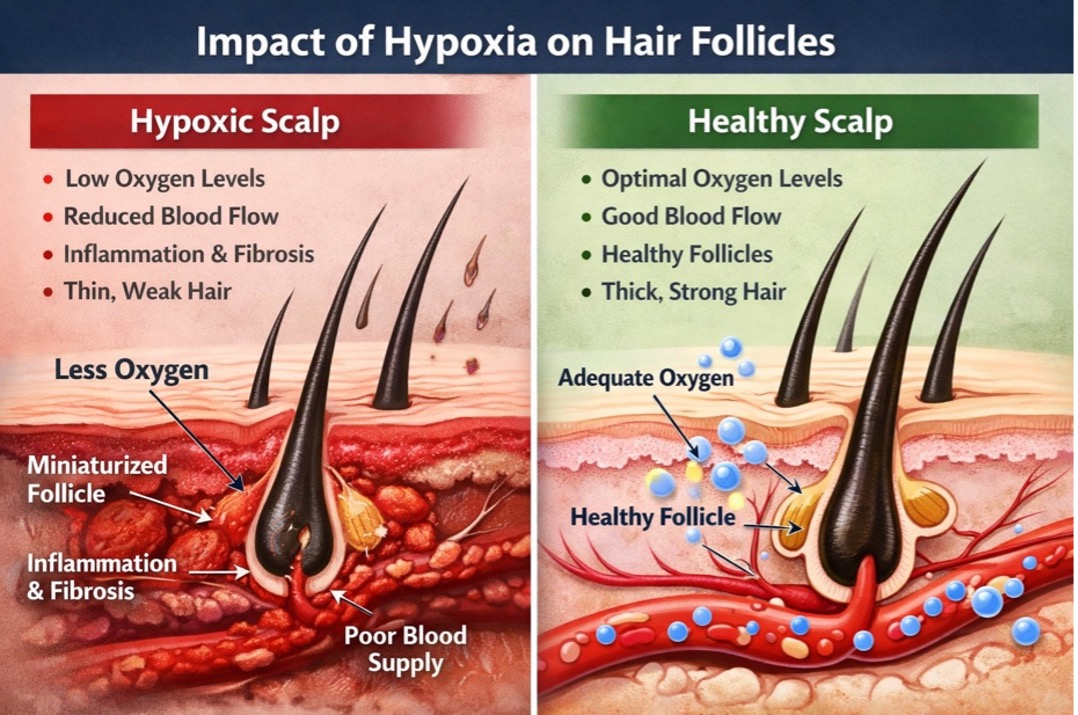
hypoxic graphic

Chronic scalp hypoxia starves hair follicles of oxygen, reduces energy production, accelerates hair cycle shutdown, promotes fibrosis, and directly contributes to follicle miniaturization and poor response to hair restoration therapies.

Our Answer: 

Ask about the revolutionary O2 Anagen Serum

Coming this March


Back to Blog
Accessibility: If you are vision-impaired or have some other impairment covered by the Americans with Disabilities Act or a similar law, and you wish to discuss potential accommodations related to using this website, please contact our Accessibility Manager at 941-289-2309.
Contact Us