Oxygen is the most important element for human survival. It is the final electron acceptor in the electron transport chain—without it, energy production collapses, cells die, and life cannot be sustained.
Oxygen is essential for aerobic respiration in mitochondria. Without it, cells can’t efficiently produce ATP—the energy currency required for every vital process. Brain tissue is highly sensitive to oxygen levels. Irreversible brain injury can begin in 3–5 minutes without oxygen.
Oxygen enables oxidative metabolism in the heart, muscles, kidneys, and liver. Loss of oxygen rapidly leads to organ failure. While humans can survive days without water and weeks without food, survival without oxygen is measured in minutes.
Oxygen amplification enhances hair regrowth because “oxygen is an efficacy/delivery multiplier”.
Hair growth is driven by follicular signaling, not just blood flow. The most effective scalp treatments: reduce DHT, reactivate dermal papilla, and improve mitochondrial energy and control inflammation.
Hair follicles don’t fail because actives are weak, they fail because the microenvironment is not receptive, scalp oxygenation improves graft survival, and follicular metabolism, especially important post-hair transplant.
Oxygen amplification can meaningfully enhance the delivery and biological effectiveness of plant-based exosomes and peptides in hair-growth serums through several mechanistically distinct pathways, and it is synergistic with Platelet Rich Plasma and Photo therapy.
Think of your hair follicles like tiny factories that grow hair. Just like any factory, they need: Oxygen, Nutrients and Energy. When they don’t get enough oxygen, they slow down… or even shut off. That low-oxygen state is called hypoxia.
First, oxygen improves follicular uptake or the “Delivery Phase” by increased follicular diffusion. Hair follicles are oxygen-sensitive mini-organs, and when they have higher local oxygen tension it improves keratinocyte and dermal papilla metabolism, which increases active transport and endocytosis.
Oxygen directly enhances exosome internalization by follicular stem cells because exosomes are not passive—they require cellular energy (ATP) to be taken up.
Secondly, oxygen boosts mitochondrial ATP, which allows for increased exosome signaling. Exosomes deliver miRNAs, proteins, and lipids and these signals require functional mitochondria to activate downstream pathways (Wnt/β-catenin, Shh, VEGF)
Oxygen amplification boosts cytochrome c oxidase activity, enhances ATP synthesis, and improves signal transduction efficiency. Without oxygen, exosomes may enter the cell but fail to trigger robust follicular regeneration.
Thirdly, oxygen reduces hypoxia-driven inflammation. A hypoxic scalp is a hostile environment for hair follicles because it increases HIF-1α, TGF-β1 (catagen trigger) and perifollicular fibrosis.
Oxygen enhances peptide stability and receptor binding. Peptides are small chain amino acids that are highly effective, but highly vulnerable to oxidative stress and enzymatic degradation. Oxygenation suppresses chronic low-grade inflammation, normalizes cytokine balance and improves peptide receptor sensitivity. Therefore, oxygen amplification will allow peptides to bind more effectively and signal longer.
Controlled oxygen amplification improves epidermal barrier function, reduces protease overactivity and enhances receptor-ligand fidelity (especially GPCR-based peptide signaling)
Oxygen + Red Light = Synergistic Uptake. When oxygen amplification is combined with 630–660 nm photobiomodulation the effect is increased mitochondrial respiration, increases nitric oxidation dissociation which leads to faster follicle activation.
Follicular Stem Cell Reactivation in oxygenated microenvironments:
Oxygen amplification can meaningfully enhance the delivery and biological effectiveness of plant-based exosomes and peptides in hair-growth serums through several mechanistically distinct pathways by reactivating bulge stem cells, enhancing dermal papilla responsiveness and shifts follicles from telogen (resting) to anagen (growth).
Oxygen amplification compensates for their lower intrinsic fusion efficiency and dependence on ATP-mediated uptake pathways. Oxygen does not make exosomes “stronger” it makes the follicle capable of responding.
Without oxygen exosomes enter poorly, peptides degrade faster and signaling is muted. With oxygen uptake improves, signaling amplifies and hair cycling normalizes.
Most scalps affected by hair loss are hypoxic, inflamed, and energy depleted. Exosomes and peptides require ATP-dependent cellular uptake. Without oxygen, signaling is muted, inconsistent, and short-lived
Oxygen amplification functions as a biological permissive factor, enabling plant-derived exosomes and peptides to exert maximal regenerative signaling within the hair follicle niche. This approach enhances efficacy without increasing pharmacologic burden, supporting both clinical scalability and safety.
We don’t introduce a new molecule; we unlock the biology that makes existing molecules work.
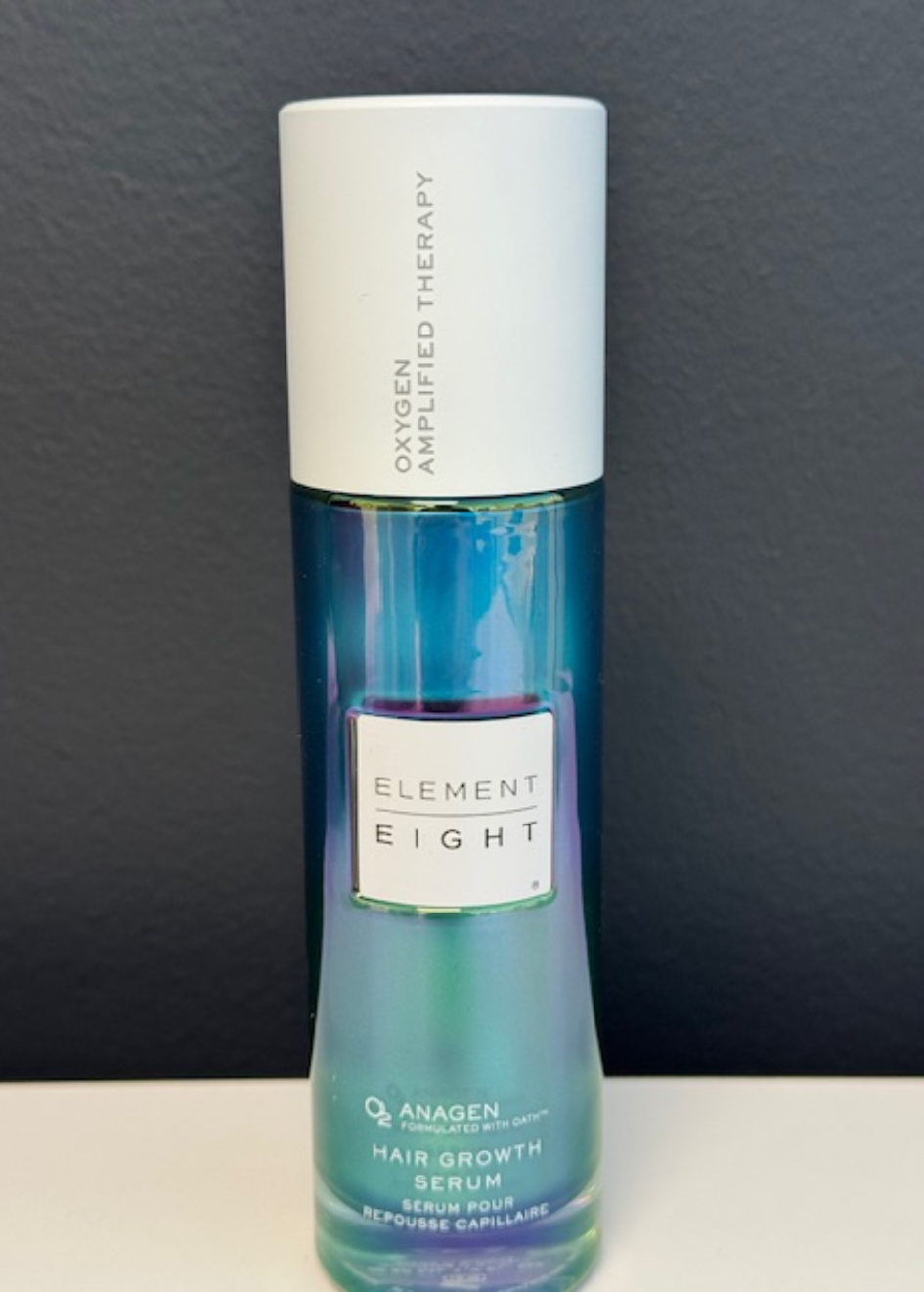
Coming soon: O2 Anagen Oxygen Amplified Serum.